Three Principles as a Paradigm · Part 1 of 8
Welcome
Thought and feeling can’t be separated. Seeing this logic clears away a lot of unnecessary thinking and opens up the inside-out paradigm.
By Keith Blevens, Ph.D., Valda Monroe and Tess Christy21 July 20264 min read
On this page · 4 sections
A Practical Way to a Better Life
Most people would like to be able to stop thinking about thoughts that are undesirable or unnecessary, but they find it hard to accomplish. Also, most people would like to have wiser and more intelligent thinking so they can live a better life. These are good ideas, but without a practical way to accomplish them, they are not of much help to us.
Principled Logic
There is a principled logic behind the human experience that is not always visible. This logic brings a precise and profound revelation about the nature of mental life and how it works. As we have insight about this we begin to see how this logic works in our own psychological experience.
Throughout time it has been enlightening for humanity when we have been able to tell the difference between how something actually works, and how it does not. When humankind uncovers fundamental knowledge, knowledge that has always existed but not previously been comprehended on a large scale, there is a paradigm shift, an evolutionary leap in our development. The comprehension that the earth is round, that we exist in a sun-centered solar system, and that germs are a reality affecting human health, are all examples of evolutionary leaps where we have been able to understand how these systems actually work and, therefore how they do not. A revelation of this order, that uncovers a deeper pre-existing logic, will rule out superstitions, competing theories and self-made philosophies that were previously thought to be true.
Three Principles Paradigm
The Three Principles Paradigm is a fundamental leap in our comprehension of human psychology. A logic is revealed about the inseparable nature of thought and feeling that sheds tremendous new light. Thought and feeling are two sides of the same coin. Although we are often deceived by believing that thought and the feeling of thought can be separated, in truth, they are inseparable. When we believe they can be separated, we have no option other than to experience that our feelings are coming directly from some other source, without thought being involved.
This psychological paradigm establishes that we are constantly experiencing our life through the principle of thought. We cannot psychologically experience life without ‘thought in the moment’ being included as the source of how we feel. In practical terms, this means that although it might look and feel like it, circumstances, people, the past or the future cannot be the source of our feeling and perception. This is not to say that the subject of what we are thinking about is not real. It is saying, we are only feeling our thinking in the moment about what we are thinking about. The object we are thinking about does not have the power to dictate how we feel.
Massive amounts of thinking fall off our minds when we start to eliminate the idea that something other than ‘thought in the moment’ can be the origin of how we feel. This is completely different from, and deeper than self-development, analyzing, personal accomplishment, or willpower. When we see insightfully that something is illogical and impossible it becomes less tempting to believe in or consider, and it will naturally and logically fall away.
Finding a wise sorter
Discovering this distinction, between how we do and do not work, is like finding a wise sorter. It sorts out for us thoughts we had on our mind that were based on an illogical idea of how our thought and feeling work. Causes for our feelings that were previously thought to be viable get rendered illogical and non-viable. There is no way to imagine how many different thoughts, dilemmas, or unnecessary ideas will no longer be coming to mind.
We can all experience the insight that we are living in the feeling of our thinking, moment to moment. This is what we’re calling the inside-out paradigm of life. Here, we encounter the pre-existing foundation of mental health, resilience, and psychological safety that is everyone’s birthright. This is what you are invited to explore through our website.
About the authors
Worked here 2008–2026
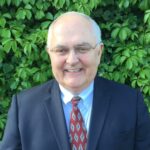
Keith Blevens was a clinical psychologist who met Sydney Banks in 1977 and was mentored by him for more than thirty years. He was Clinical Director of the Minneapolis Institute of Mental Health before giving his working life to the Three Principles, teaching alongside his wife, Valda Monroe, for more than forty years. He continued working until he passed away in February 2026, and passed his work on to his daughter, Mattie Blevens.

Worked here 2008–2022
Valda Monroe met Sydney Banks with Keith Blevens in 1977, and they taught the Three Principles together from then on. She brought no degrees to the work, but a love of logic and order, and created a way of teaching Syd's understanding as a paradigm that has been used in hospital systems, leadership training, coaching and counselling. Valda retired in 2022.

Worked here 2016–2018
Tess Christy worked with Keith Blevens and Valda Monroe, bringing her remarkable understanding of language and grammar to their work. She had an extraordinary ability to turn a poor sentence into a great one. Her love of scientific logic and of wisdom drew her to the Three Principles, and she found in Keith and Valda's work deep answers about the human experience.
“Here” means The Hidden Cause and the work that came before it under other names: Three Principles Psychology (2022–2026), Three Principles Paradigm (2016–2022), and Keith and Valda’s work before 2016.
From the meetings
The Three Principles, Inside out, outside in and Feelings also come up in the recorded meetings, where members can hear them explored in conversation. See the ways in or sign in.
From The Hidden Cause · https://thehiddencause.com/articles/welcome/ · You may quote briefly, with credit to the author and a link. Please ask before republishing in full.
Also available as Markdown, for reading tools and AI. Quote briefly with credit and a link; please ask before republishing in full.
Cite this article
APA
Blevens, K., Monroe, V., & Christy, T. (2026, July 21). Welcome. The Hidden Cause. https://thehiddencause.com/articles/welcome/
MLA
Blevens, Keith, et al. “Welcome.” The Hidden Cause, 21 Jul. 2026, https://thehiddencause.com/articles/welcome/.


